Our News:
TALES FROM THE
TALES FROM THE
daRI® FARM
Help Your Teen Maximize Healthy Growth
By realdari / August 13, 2026
by Kristin Kirkpatrick, MS, RDN
Want to Help Your Teen Grow? Start with These 4 Science-Backed Strategies
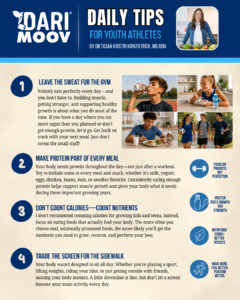
Amid all the attention on weight-loss medications, it’s easy to forget that for many families, the challenge isn’t losing weight—it’s gaining it. For teen athletes, that matters a lot. As boys and girls prepare for high school sports, many focus on building muscle, getting stronger, and supporting healthy gains in both weight and height. With the best intentions, parents often turn to protein powders, supplements, and other products, hoping they’ll help. But without understanding the fundamentals of healthy growth, it’s easy to spend money on products that may offer little benefit. The good news is that evidence-based nutrition strategies can support growth, performance, and long-term health. Here are four science-backed approaches to help your teen maximize healthy growth before high school.
1. Focus on real protein sources that are often 80% or more protein by weight
Many parents in my practice reach for protein powders and shakes, thinking they’re giving their teen an advantage in becoming stronger, quicker. However, not all protein products are created equal. Many contain lower-quality protein sources along with added sugars, artificial sweeteners, or large amounts of vitamins and minerals that most teens simply don’t need. Research https://pmc.ncbi.nlm.nih.gov/articles/PMC8075117/ shows that whey protein is one of the highest-quality protein sources for supporting growth, muscle development, and general nutrition. It also appears to have benefits beyond protein alone, including supporting a robust gut microbiome, which plays an important role in overall health. Because whey comes from milk, it provides a naturally complete protein with all the essential amino acids teens need during this important stage of growth. When choosing a protein drink, look for one made with simple, recognizable ingredients. DARI® MOOVTM milk offers 27g of high-quality protein – all made with real ingredients, and no artificial colors or sweeteners. It tastes great and offers a high-quality protein source for your teen. In addition to milk, consider low-fat proteins such as lean meat, poultry, and fish, as well as beans and legumes, cottage cheese and yogurt, and nuts and seeds.
2. Consider Creatine
Creatine is a compound obtained from amino acids and is found in muscles, with smaller amounts in the heart, brain, pancreas, and testes (https://pmc.ncbi.nlm.nih.gov/articles/PMC7910963/). It’s an essential part of muscle upkeep and growth. Your body makes some creatine, but not enough to reach suggested levels. Therefore, a supplement is one of the best routes to boost levels. I prefer creatine HCL (hydrochloride) because it requires a smaller dose, mixes easily, is generally well tolerated, and supports strength, power, recovery, and lean muscle development (https://pubmed.ncbi.nlm.nih.gov/21424716/). Additionally, creatine may preserve or increase speed and quickness. For a healthy teen, the recommended dose is about 750 mg per 100 lb. of body weight, taken about 1 hour before training. A half-dose after a hard workout may also be given for accelerated recovery.
3. Prioritize Sleep
You can provide the best diet, supplements, and workouts, but without sleep, growth and height may remain stagnant. Sleep is likely one of the most important aspects of this plan, as it has been shown to be a key factor in growth in teen populations (https://www.nhlbi.nih.gov/health/sleep-deprivation/health-effects). When a teen sleeps, he or she releases a hormone that stimulates growth and muscle mass. Sleep also has a role in repairing cells and tissue, as well as in puberty. Sleep has also been shown to play a role in better cognition and mental health in teens (https://pmc.ncbi.nlm.nih.gov/articles/PMC5074885/).
4. A high-quality whole-foods-based multivitamin may be necessary
Families are busy, and sometimes there are not enough hours in the day to get all the nutrients necessary for teen health. Therefore, a supplement may often help. Look for a whole foods-based supplement, preferably in a capsule form (gummies may have lower nutrient levels and bioavailability), made in the USA, with certifications such as:
- USP Verified
- NSF Certified
- Informed Choice
These certifications help ensure the product contains what the label claims and has been tested for contaminants. Websites such as Consumer Lab may also help in assessing quality. Many teens with a balanced, nutrient-dense diet may not need a multivitamin, and it’s important to keep in mind that a multivitamin supplement does not replace a healthy diet.
If your teen wants to grow, help them do so in an easy, sustainable, and, above all, enjoyable way!

kristinkirkpatrick.com
kristin@kristinkirkpatrick.com