Our News:
TALES FROM THE
TALES FROM THE
daRI FARM
Easy Berry-Banana Protein Smoothie with DARI MOOV™
By realdari / August 19, 2026
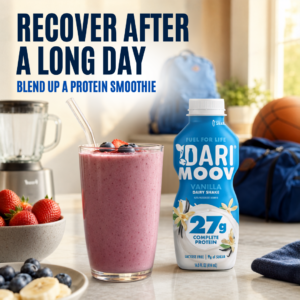
RECOVER AFTER A LONG DAY! 🥤💪
From school and practice to work and everything in between, busy days require great recovery. Blend up a delicious protein smoothie with DARI MOOV™ and give your body complete dairy protein to help support recovery.
Easy Berry-Banana Protein Smoothie:
🍓 1 bottle Vanilla DARI MOOV™
🫐 1 cup frozen mixed berries
🍌 ½ banana
🧊 Ice, if desired
Blend until smooth and enjoy!
Each bottle of DARI MOOV™ delivers 27g of complete protein and is lactose-free with no artificial sweeteners, colors or flavors.
Protein • Hydration • Recovery
Real Dairy. Real Good.
#DARIMOOV #ProteinSmoothie #RecoveryNutrition #BackToSchool #ProteinToGo
Help Your Teen Maximize Healthy Growth
By realdari / August 13, 2026
by Kristin Kirkpatrick, MS, RDN
Want to Help Your Teen Grow? Start with These 4 Science-Backed Strategies
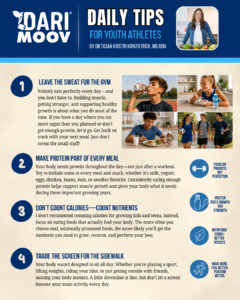
Amid all the attention on weight-loss medications, it’s easy to forget that for many families, the challenge isn’t losing weight—it’s gaining it. For teen athletes, that matters a lot. As boys and girls prepare for high school sports, many focus on building muscle, getting stronger, and supporting healthy gains in both weight and height. With the best intentions, parents often turn to protein powders, supplements, and other products, hoping they’ll help. But without understanding the fundamentals of healthy growth, it’s easy to spend money on products that may offer little benefit. The good news is that evidence-based nutrition strategies can support growth, performance, and long-term health. Here are four science-backed approaches to help your teen maximize healthy growth before high school.
1. Focus on real protein sources that are often 80% or more protein by weight
Many parents in my practice reach for protein powders and shakes, thinking they’re giving their teen an advantage in becoming stronger, quicker. However, not all protein products are created equal. Many contain lower-quality protein sources along with added sugars, artificial sweeteners, or large amounts of vitamins and minerals that most teens simply don’t need. Research https://pmc.ncbi.nlm.nih.gov/articles/PMC8075117/ shows that whey protein is one of the highest-quality protein sources for supporting growth, muscle development, and general nutrition. It also appears to have benefits beyond protein alone, including supporting a robust gut microbiome, which plays an important role in overall health. Because whey comes from milk, it provides a naturally complete protein with all the essential amino acids teens need during this important stage of growth. When choosing a protein drink, look for one made with simple, recognizable ingredients. DARI MOOVTM milk offers 27g of high-quality protein – all made with real ingredients, and no artificial colors or sweeteners. It tastes great and offers a high-quality protein source for your teen. In addition to milk, consider low-fat proteins such as lean meat, poultry, and fish, as well as beans and legumes, cottage cheese and yogurt, and nuts and seeds.
2. Consider Creatine
Creatine is a compound obtained from amino acids and is found in muscles, with smaller amounts in the heart, brain, pancreas, and testes (https://pmc.ncbi.nlm.nih.gov/articles/PMC7910963/). It’s an essential part of muscle upkeep and growth. Your body makes some creatine, but not enough to reach suggested levels. Therefore, a supplement is one of the best routes to boost levels. I prefer creatine HCL (hydrochloride) because it requires a smaller dose, mixes easily, is generally well tolerated, and supports strength, power, recovery, and lean muscle development (https://pubmed.ncbi.nlm.nih.gov/21424716/). Additionally, creatine may preserve or increase speed and quickness. For a healthy teen, the recommended dose is about 750 mg per 100 lb. of body weight, taken about 1 hour before training. A half-dose after a hard workout may also be given for accelerated recovery.
3. Prioritize Sleep
You can provide the best diet, supplements, and workouts, but without sleep, growth and height may remain stagnant. Sleep is likely one of the most important aspects of this plan, as it has been shown to be a key factor in growth in teen populations (https://www.nhlbi.nih.gov/health/sleep-deprivation/health-effects). When a teen sleeps, he or she releases a hormone that stimulates growth and muscle mass. Sleep also has a role in repairing cells and tissue, as well as in puberty. Sleep has also been shown to play a role in better cognition and mental health in teens (https://pmc.ncbi.nlm.nih.gov/articles/PMC5074885/).
4. A high-quality whole-foods-based multivitamin may be necessary
Families are busy, and sometimes there are not enough hours in the day to get all the nutrients necessary for teen health. Therefore, a supplement may often help. Look for a whole foods-based supplement, preferably in a capsule form (gummies may have lower nutrient levels and bioavailability), made in the USA, with certifications such as:
- USP Verified
- NSF Certified
- Informed Choice
These certifications help ensure the product contains what the label claims and has been tested for contaminants. Websites such as Consumer Lab may also help in assessing quality. Many teens with a balanced, nutrient-dense diet may not need a multivitamin, and it’s important to keep in mind that a multivitamin supplement does not replace a healthy diet.
If your teen wants to grow, help them do so in an easy, sustainable, and, above all, enjoyable way!

kristinkirkpatrick.com
kristin@kristinkirkpatrick.com
WHAT’S IN YOUR HYDRATION AND FUEL KIT?
By realdari / July 22, 2026
Leslie Bonci, MPH,RDN,CSSD,LDN,FAND
Email: boncilj1@gmail.com 412-559-5974
Website: activeeatingadvice.com
IG @boncilj FB/X @lesliebonci
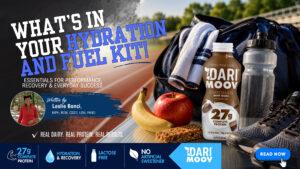
I have never yet met a student athlete who wants to be the weakest, slowest and runs out of gas before the end of practice or competition. Yet, if you show up to practice or events under fueled and underhydrated- you may not perform to the best of your ability. Not only it is important to drink and eat enough for performance, but also to prevent heat illness, injury and mental fatigue. Your body is always in a state of prepare or repair. TO optimize performance and recovery you should fuel and hydrate BEFORE and AFTER every practice and workout.
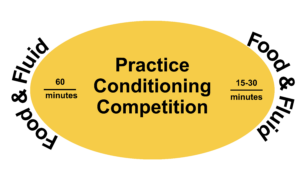
I always encourage my athletes to parenthesize activities by having something to eat/drink 1 hour BEFORE practice and helping the body start recovering as soon as practice/workouts/events/tournaments are over.
#FuelsofEngagement
Need to prioritize pre and post workout fueling
Skipping meals/fasting will NOT improve performance
And remember- you don’t have to eat or drink to excess before or after exercise. The goal is 20 ounces of fluid 1 hour before so you could do a DARI MOOV plus a small cup of water before or after lifting and if you are choosing something before cross country, football, baseball, softball, soccer, field hockey, lacrosse, ice hockey, add a piece of fruit or a granola bar to optimize your carbohydrate. And how cool is this- milk is a better re-hydrator post exercise than water or juice- so that bottle of DARI MOOV not only helps your muscles to repair and replete but also rehydration optimization.
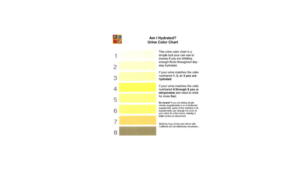
Start your workouts well hydrated. Urine should be light in color and higher in volume BEFORE you start to exercise. Choose fluid as well as liquid containing foods (fruits, vegetables, soups, smoothies) before practice, events or the weight room. Hydration NEVER takes a vacation. Being well hydrated will improve strength, speed and stamina. Caffeine does not dehydrate but can overstimulate.
Adding electrolytes may be the right decision along with optimal hydration to prevent cramping. Sports drinks, electrolyte packets, adding salt to food or eating salty foods such as pickles, Soy sauce, and broth can be helpful. DARI MOOV contains sodium, potassium and calcium to help you #feedtheneedtosucceed
REPLACE WHAT YOU LOSE. For every pound of fluid you lose during practice/workouts- replace with a bottle of water or sport drink. If you lose 5 pounds during practice, you will need to drink around 5 bottles. Aim for 1-2 bottles per hour after practice. Fluid replacement POST-exercise is in ADDITION TO your daily fluid needs
THINK YOUR DRINK! You need to drink enough and #scorewithyourpour Water, milk, juice, even tea and coffee and sometimes sports drinks can be helpful.
How you drink may make your performance soar or stink. Chugging water in an attempt to hydrate is not productive. The body can only absorb a maximum of 1 quart (32 oz) per hour in a hot and humid environment. Hydrate smarter, not harder, by drinking a max of 4-8 good sized gulps of water or sports drink every 20 minutes.
Food is only great if you eat what is on your plate! Choose foods you like as a part of your performance plate. Be selective but not neglectful when it comes to food choices. Do make an effort to include protein, produce and some carbs at every meal you eat.
No need for elimination without justification. Cannot focus solely on what you won’t eat.
IF YOU SKIP YOUR PERFORMANCE MAY SLIP. Skipping meals can hinder your performance and progress in changing your body composition. Aim to be consistent with the number of meals and snacks you choose daily. Food is fuel for performance; don’t let yourself run on empty.
START OFF STRONG. Breakfast is a chance to refuel, replenish and rehydrate so your body does not have to play catch up. Do make sure to put protein, produce and carbs on your plate. If you are too tired to chew, a smoothie may be a great choice for you.
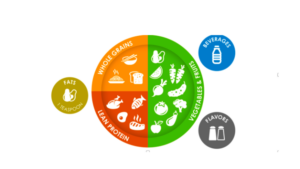
Create a #winningplate with half of your plate as produce (fruits and vegetables), ¼ as protein (meat, poultry, fish/shellfish, dairy, eggs, plant-based protein) and ¼ as carbs (rice, pasta, quinoa, potato, bread, cereal) A performance plate delivers on quality, quantity and consistency to help you maximize strength, speed, stamina and recovery.
CARBS ARE NOT THE ENEMY! Carbs from fruits, pasta, rice, potatoes, bread, corn provide the fuel your body needs for practice and workouts. If you eliminate the carbs from your plate, you may find yourself slower, weaker and more fatigued. Plus, too few carbs force your body to use lean mass as a fuel source during exercise. So just say no to too low when it comes to carbohydrates.
When it comes to protein, more is not always better. Not just how much protein you eat but HOW you eat it. Protein as part of every meal both from animal foods: dairy, eggs, poultry, meat, fish/seafood as well as plants: bens, grains, veggies, nuts/seeds, soy foods. Protein powders are NOT the same as eating foods with protein.
FAT IS ALL THAT
Fat is an important fuel for exercise. Foods such as full fat dairy, nuts and nut butters, seeds, avocado, oils, salad dressings/mayonnaise should be included not excluded
SUPPLEMENT SAVVY: When it comes to supplements, just because you can buy it does not mean you have to try it. Supplements are a complement to NOT a replacement for food
RESPECT DON’T NEGLECT YOU BODY
Enough sleep
POSITIVE BODY TALK- #YesYouCan
Treat your body right!
Get your sports nutrition info from those that do know. When it comes to nutrition, there is a lot of misinformation which may do more to detract then enhance your sports performance. Working with a sports dietitian can help you strategize, and individualize to realize your goals within your budget, energy needs and culinary ability.