HEALTH, NUTRITION & DIET

Beyond Bones: The Growing Evidence That Dairy Supports Heart Health
By realdari / February 18, 2026
Written by: Kristin Kirkpatrick, MS, RDN
Dairy consumption is an essential component of overall bone health, but did you know it’s also good for cardiometabolic health? Full-fat dairy has been associated with a reduced risk of cardiovascular disease. Since February is National Heart Month, we wanted to celebrate by sharing data from 4 large studies on the cardiovascular benefits of dairy.
Dairy consumption over time improves heart health.
A 2025 study https://www.sciencedirect.com/science/article/abs/pii/S0022316625005747?fr=RR-2&ref=pdf_download&rr=98afc4621bc9acf6 in the Journal of Nutrition that followed young adults for a period of 25 years found that individuals who consumed the most full-fat dairy had the least risk of coronary calcification (a major risk factor for the development of heart disease) over the 25-year time frame. Essentially, full-fat dairy earlier in life is cardioprotective later in life.
More dairy = fewer cardiovascular events
A 2023 study https://academic.oup.com/eurheartj/article/44/28/2560/7192512 in the European Heart Journal, involving over 240,000 individuals in 80 countries, found that full-fat dairy was included in 6 food groups (also including fruits and vegetables, nuts, and fish) that were associated with a lower incidence of stroke, heart attack, and other major cardiovascular events. A greater intake of dairy was associated with increased intake of compounds found to benefit blood pressure and overall metabolic health.
Dairy can improve health outcomes by reducing the risk of heart disease.
A 2020 study https://drc.bmj.com/content/8/1/e000826 in the British Medical Journal found that individuals who consumed more than 2 servings of dairy every day had a lower incidence of metabolic syndrome. Additionally, overall daily consumption was associated with lower blood pressure and a lower risk of type 2 diabetes. Other studies https://pmc.ncbi.nlm.nih.gov/articles/PMC7948850/ have also associated dairy intake with a lower risk of type 2 diabetes and improved blood sugar control. These metabolic components are all associated with an increased risk of heart disease. Thus, reducing these conditions reduces the risk of heart disease.
Dairy consumption reduces the risk of stroke, a major indicator of heart disease.
A 2021 study https://pmc.ncbi.nlm.nih.gov/articles/PMC8970833/ in the Journal Advances in Nutrition found that individuals with higher dairy intake had a lower risk of stroke.
What are some common associations amongst all these studies?
Several components of dairy are associated with improved cardiovascular health. Magnesium, potassium, and calcium are all associated with improvements in blood pressure. High protein is associated with improved muscle mass and a reduced risk of obesity, and using full-fat dairy and protein to stay full longer may assist with portion control and weight management. Finally, fermented dairy may improve gut health, thereby benefiting overall cardiometabolic health. You can consume more dairy by adding cottage cheese to sauces and batters to boost protein, choosing a whole milk protein drink for a mid-day pick up, or pairing a cheese stick with an apple for an after-dinner treat.
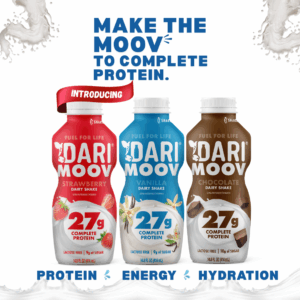
DARI® MOOV™ products provide all these components in their protein shakes. If you’re looking for a protein shake without artificial ingredients that tastes great and is nutrient-rich, you’ve come to the right place. For example, their no artificial sweetener protein drink contains 27 whopping grams of protein that is different from the other options out there – it’s a protein shake without chalky taste, a protein shake to build muscle mass, and a whole milk protein shake that is lactose free. DARI® MOOV™ best tasting protein drink will satisfy both your taste buds and your heart!

Written by: Kristin Kirkpatrick, MS, RDN
kristinkirkpatrick.com
kristin@kristinkirkpatrick.com
kristin@kristinkirkpatrick.com